
SUMMARY
Cryptocurrency mining is the backbone of many blockchain networks, allowing miners to earn rewards by validating transactions and securing the system. Most people have heard of mining pools—but what about solo mining? In this guide, we’ll explain what solo mining is, how it works, and whether it’s a good choice for you.
What Is Solo Mining
Solo mining means mining by yourself, without joining a mining pool. You connect your mining machine (like an ASIC ) directly to the blockchain network and try to solve the cryptographic puzzle on your own. If you successfully find a valid block, you receive 100% of the block reward and transaction fees. No sharing, no pool fees—just pure profit. But there’s a catch: your chances of finding a block are very low unless you have massive computing power.
How Solo Mining Works
In solo mining, your miner independently tries to solve blocks just like any node on the network. Unlike pool mining, where the effort is distributed and rewards are shared based on contribution, solo miners only get paid when they successfully mine a block entirely on their own. That means:
- If you find a block → you get the entire reward
- If you don’t find a block → you get nothing, even after days or weeks of work
This system is high-risk and highly unpredictable, especially for major coins like Bitcoin.
Solo Mining vs Pool Mining
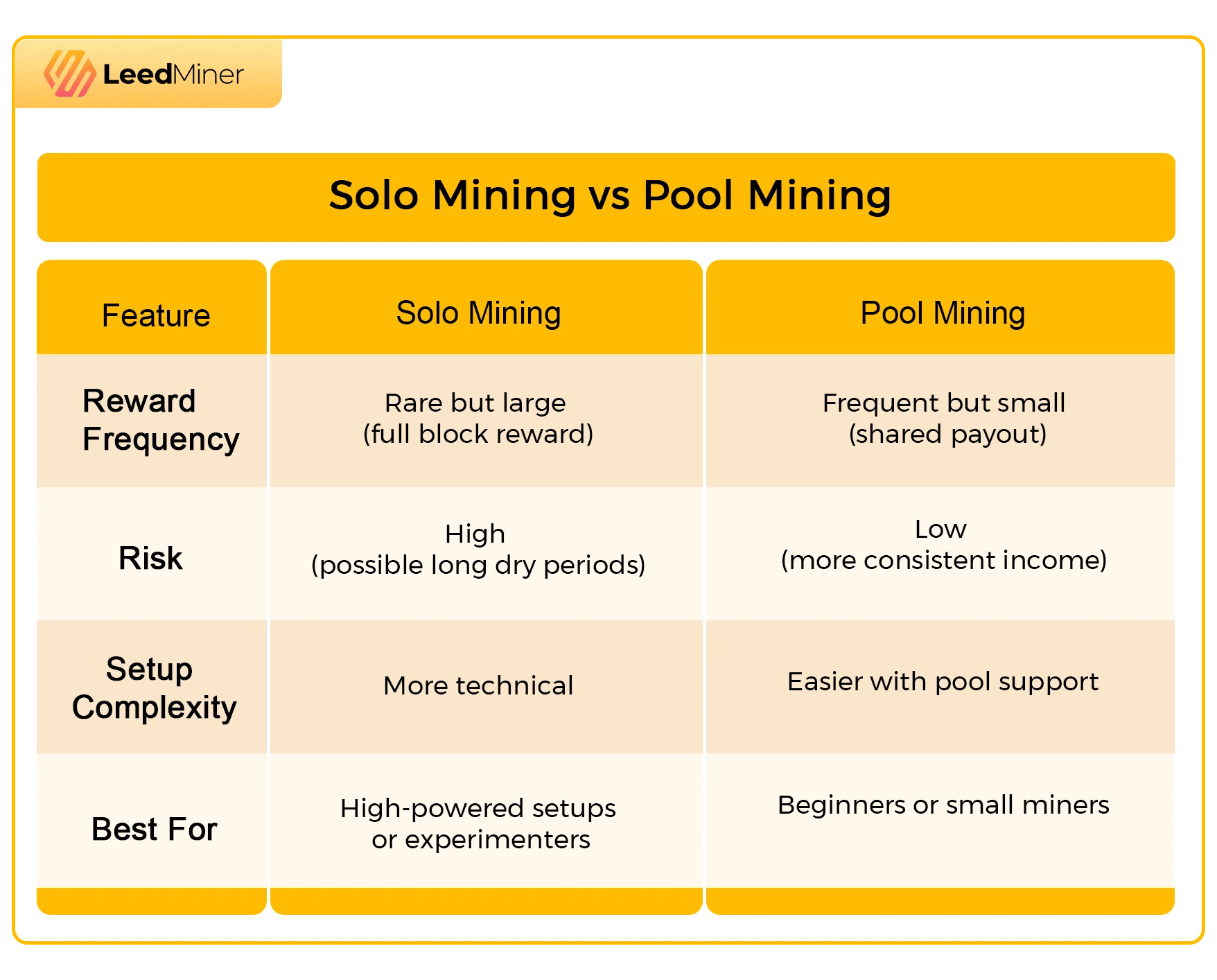
In short: Pool mining offers a more stable, predictable income. Solo mining is more like a lottery—you might win big, but you also might get nothing for a long time.
Is Solo Mining Still Viable
Solo mining used to be common in the early days of crypto. Back then, even a simple PC could find a block on the Bitcoin network. But today?
- Bitcoin, Litecoin, and other major coins have enormous network difficulty
- Without industrial-level ASIC hardware, solo mining these coins is virtually impossible
- However, solo mining may still be viable on newer, smaller, or low-difficulty coins
Some miners also attempt solo mining on testnets or new blockchain projects to secure early rewards.
Benefits and Risks of Solo Mining
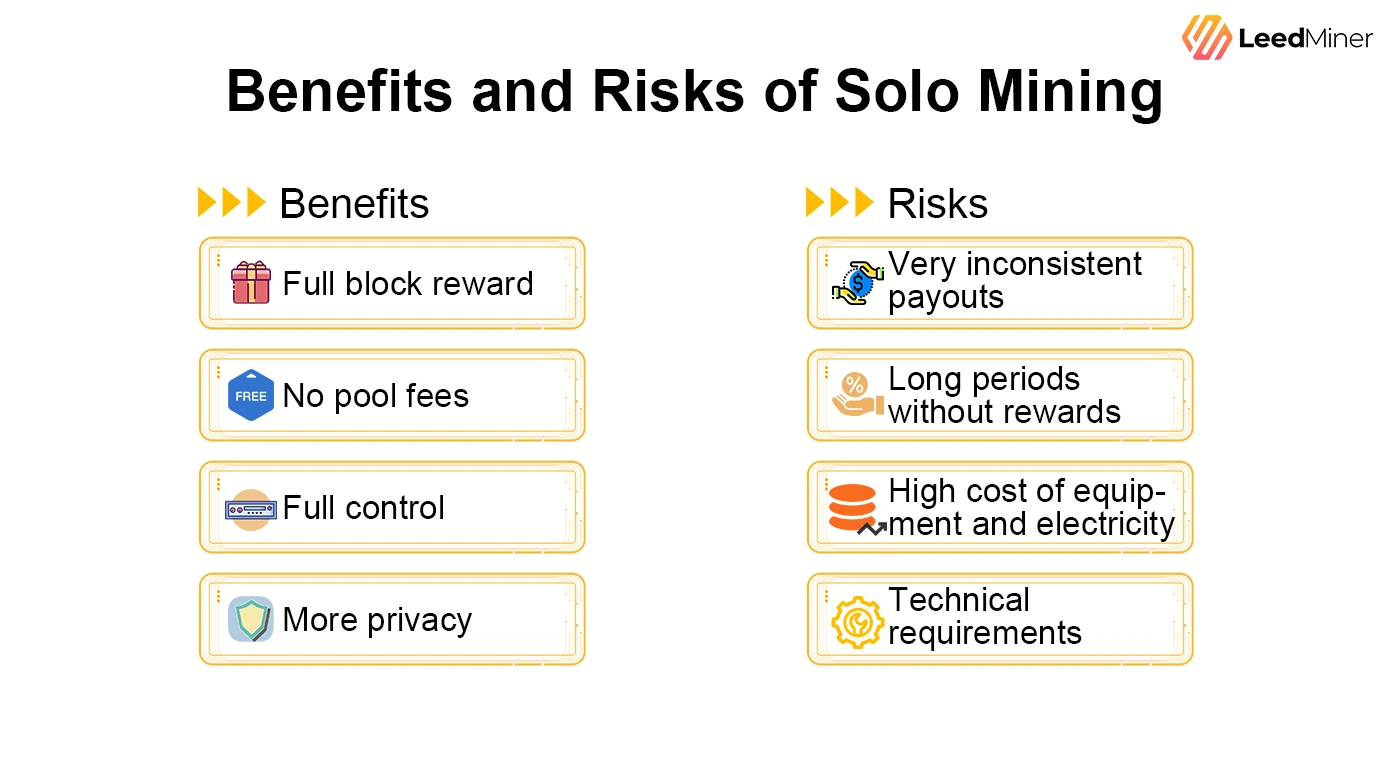
patience, strong hardware, and a tolerance for risk
Tools & How to Start Solo Mining
To try solo mining, you’ll need:
- A powerful ASIC miner (e.g., Antminer S21, L7)
- A stable electricity source and fast internet
- A full-node wallet (e.g., Bitcoin Core or Litecoin Core)
- Proper configuration for solo mining mode
You’ll connect your miner to your own node instead of a pool server. Alternatively, you can use semi-solo platforms like CKpool, which allow you to mine “solo” through their infrastructure without running your own full node.
Final Thoughts: Should You Try Solo Mining
Solo mining may sound exciting—it’s just you vs. the entire network—but it’s not recommended for most miners, especially beginners. Unless you have:
- High-performance hardware
- Access to cheap electricity
- Technical knowledge
- The patience to wait for possible months without a payout…
pool mining is likely a better option. Still, for hobbyists, tech explorers, or those mining low-difficulty coins, solo mining can be a fun and rewarding challenge.
FAQs on Solo Mining
Q1 Is solo mining profitable in 2025
Only for miners with very high hashrate and cheap electricity. For most people, pool mining is more stable and reliable.
Q2 What coins are still worth solo mining
Small-cap or newly launched coins with low network difficulty might be worth solo mining. BTC and LTC are too competitive for solo miners.
Q3 Do I need special equipment for solo mining
Yes. You’ll need a powerful ASIC miner, a full-node wallet, and a reliable internet and power setup. Solo mining is not beginner-friendly.
发表回复